


Everyone thinks Heated Rivalry is a hockey show with a lot of sex scenes.
They’re not entirely wrong. There is hockey, and yes, the intimate scenes are central to the story. But anyone who’s actually watched the show knows it’s about something much deeper: communication, shame, and the cost of hiding who you really are.
If you haven’t seen it, here’s the premise: Shane Hollander, a methodical Canadian hockey star, and Ilya Rozanov, his flashy Russian rival, spend years hooking up in secret after games. What starts as physical attraction slowly becomes something neither of them knows how to handle: love. But they can’t talk about it. They can’t even talk to each other, not really. For years, they hide, they compartmentalise, they pretend it’s just sex because admitting it’s more means risking everything: their careers, their reputations, their place in a sport that has never made room for people like them.
The show isn’t really about hockey at all. It’s about what happens when you can’t be honest; with others, or with yourself.
And that’s when it hit me: this is exactly what I’ve been doing in my SEO career.
The Solo Consultant’s Shame
I’m a solo SEO consultant. Not an agency. Not a team. Just me.
For years, I felt like that was something I needed to compensate for. When potential clients asked about my setup, there was always this underlying worry: would “solo consultant” sound like “just a freelancer”? Someone without the resources or authority to do real work?
The logic seemed airtight: teams have more resources, more capacity, more credibility. Psychologically, businesses are more inclined to trust a team than a single person. Even when I knew my work was solid, I couldn’t shake the feeling that being solo made me weaker; less capable of handling the scope and scale that bigger clients needed.
I didn’t have a specific moment where this hit me. It wasn’t a lost pitch or a client choosing an agency over me. It was more insidious than that; a constant background hum of inadequacy. I’d see agencies winning awards, consultants with bigger portfolios, and think: I need to position myself better. I need to prove I’m legitimate.
That’s why I started entering awards. Not (just) for the recognition, but because I thought if I could say “award-winning SEO consultant” instead of “solo SEO freelancer,” maybe people would take me seriously. Maybe I would take me seriously.
The Cottage Episode
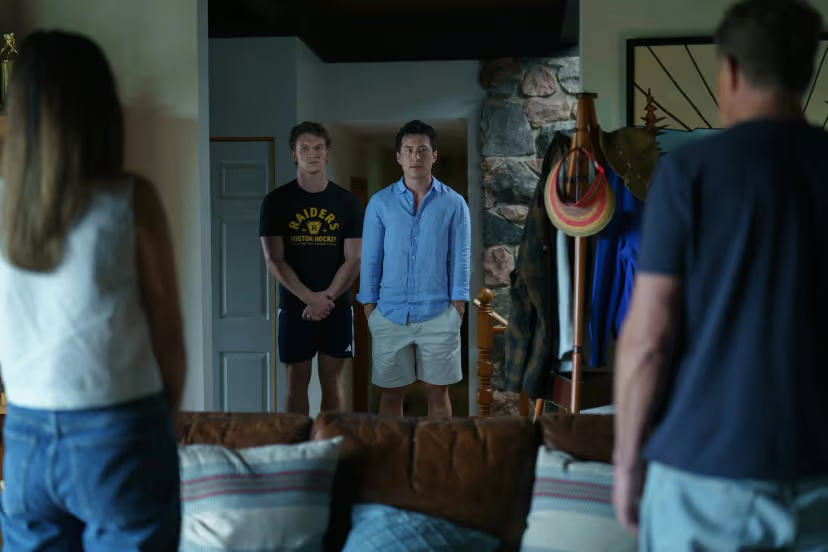
There’s an episode in Heated Rivalry called “The Cottage” that wrecked me.
It’s the turning point. After years of secrecy and half-truths, Shane invites Ilya to his family’s cottage. For the first time, they’re not sneaking around after a game or meeting in a hotel room. They’re just… together. And in that space, away from the performance and the hiding, everything changes.
Ilya, who’s spent the entire series being brash and deflective, finally lets himself be vulnerable. He tells Shane, “She would have loved you. Like I love you.” It’s the way he says it – connecting Shane to his late mother, the person who mattered most to him. It’s not just “I love you.” It’s “you would have belonged in the most important part of my life.”
And Shane, who’s been so careful and controlled, starts planning their future. Not hypothetically, but concretely. He’s done pretending this is temporary.
The episode works because it’s not about a grand gesture or a dramatic confession. It’s about two people finally letting themselves be honest after years of maneuvering around the truth. And that honesty is only possible because of all the work they’ve done; separately and together, and because of the people around them (particularly the women in their lives) who’ve been guiding them toward this moment.
When I watched it the second time, I realised: this is what I’ve been avoiding in my own work.
The Award I Didn’t Expect
In 2025, I won Silver for Best Low Budget Campaign at the APAC Search Awards. Then, in 2026, I won Best B2C SEO Campaign and received four nominations from a single client project with Kate Hill Flowers, a luxury Melbourne florist.
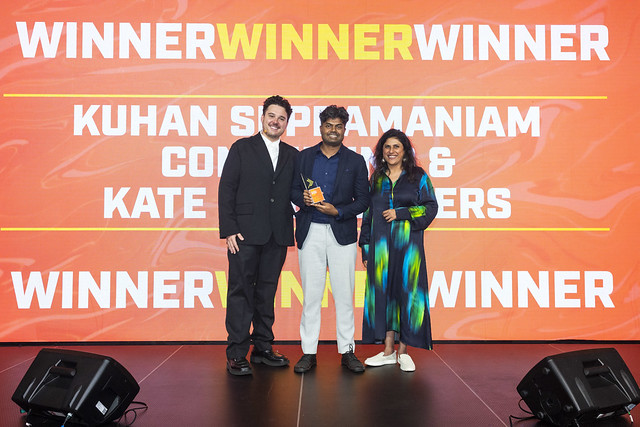
When they called my name on stage, I was genuinely shocked. Not because I didn’t think my work was good, I knew it was; but because some part of me still didn’t believe I deserved to be there. Solo consultant. Limited resources. No big team behind me.
But here’s what shifted: the award didn’t make me better at SEO. It didn’t change the quality of my work. What it did was give me permission to believe something I should have known all along, that I was already good enough.
After that, something loosened. I started thinking: if I can win awards, if I can get nominated alongside agencies and bigger operations, maybe I can approach bigger clients with confidence. Not because the award made me capable of that work, but because it made me stop hiding from the fact that I already was.
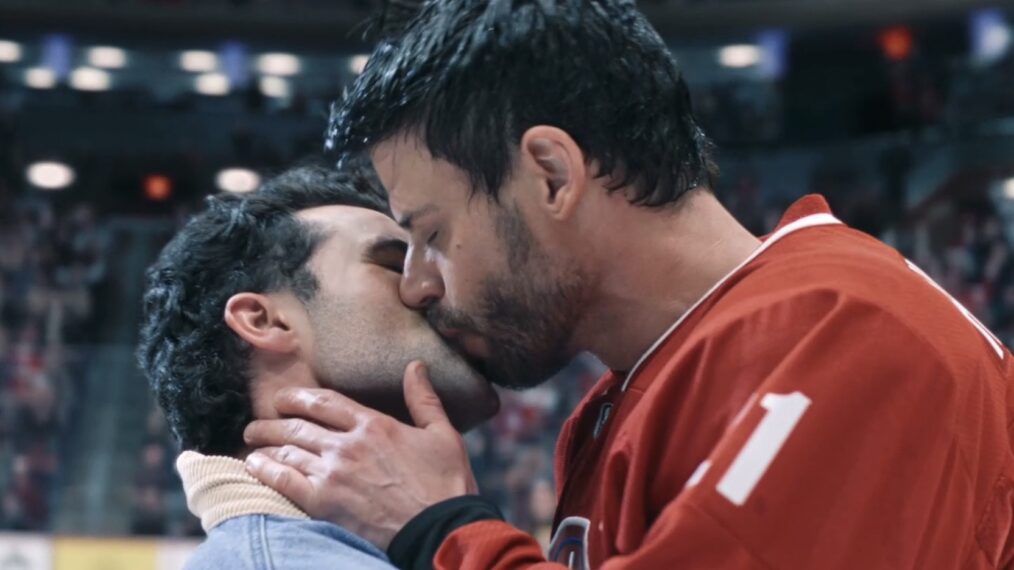
It reminds me of Scott Hunter’s storyline in Heated Rivalry. Scott is a veteran player who’s been closeted his entire career. In one spur-of-the-moment decision, he kisses his boyfriend on live television after winning the championship. It’s terrifying and reckless and completely honest. And it gives Shane and Ilya the courage to follow suit.
Someone else going first gives you permission.
What Communication Breakdown Actually Looks Like
Here’s the SEO parallel that no one talks about: most projects fail because of communication, not technical incompetence.
I’ve had clients come to me with completely different expectations than what I was offering. They didn’t understand what SEO was, how campaigns worked, or what a realistic timeline looked like. And in those early months, before trust was established; the relationship felt shaky, even fragile.
I’d send reports, explain strategies, outline next steps. But until they started seeing results, there was this underlying tension: Do you actually know what you’re doing?
The problem wasn’t the work. It was that I hadn’t done the harder job of helping them feel confident in the work. I was focused on execution, not communication.
Over time, I got better at this. With Kate Hill Flowers, I’ve been relentlessly honest about outcomes, about what they need to implement and why, about what’s working and what isn’t. I stopped trying to sound like an agency and started sounding like myself. And instead of maintaining a rigid client-consultant boundary, I leaned into a more relaxed, human relationship.
It’s not unprofessional. It’s the opposite. It’s treating the client like a real person who deserves transparency, not corporate-speak.
But here’s the thing: I couldn’t do that until I stopped being ashamed of being solo, of being intense, of being myself.
The Real Work Isn’t Technical
People think SEO is about keywords and backlinks. Just like people think Heated Rivalry is about hockey and sex.
But the real work, the work that actually moves the needle; is relational. It’s about trust. It’s about communication. It’s about being willing to be vulnerable and honest, even when it’s uncomfortable.
Shane and Ilya’s relationship doesn’t work because they’re good at hockey. It works because they finally stop hiding and start talking. They let the women in their lives guide them. They lean on each other. They admit when they’re scared.
And the best SEO relationships I’ve had, the ones where the work actually thrives; are the same. They’re not built on my technical expertise alone. They’re built on the willingness to say: “Here’s what’s happening. Here’s what I recommend. Here’s where I need your help. Here’s what I don’t know yet.”
That level of honesty only works if you’re not performing. If you’re not pretending to be something you’re not.
Being Intense Isn’t Something to Hide
I’m an intense person. I care deeply about my work, sometimes to a fault. I over-communicate. I get invested in my clients’ success in a way that probably isn’t always strategic.
For a long time, I thought that was a weakness. Something to tone down. Something that made me seem less professional, less “agency-like.”
But watching Heated Rivalry twice, sitting with the way Shane and Ilya finally let themselves be fully seen, flaws and intensity and all; I realised: the intensity is the work. The care is the value.
Being a solo consultant doesn’t mean I lack resources. It means I bring myself fully to every project. There’s no bureaucracy, no account manager as a buffer. It’s just me, doing the work I believe in, with the clients I choose to partner with.
That’s not a limitation. That’s the offering.
Sitting With It
I don’t have a neat conclusion here. I’m still figuring this out. I’m still learning to fully own who I am and how I work.
But if you’re reading this and you’ve ever felt like you’re not enough, because you’re solo, because you’re small, because you don’t look like the agencies or the big names; I want you to sit with something:
The work you’re doing is real. The clients you’re serving are real. The results you’re getting are real.
You don’t need to pretend to be bigger. You just need to stop hiding.
And if you’ve watched Heated Rivalry, you already know: the best moments aren’t the ones where they’re performing for the cameras. They’re the ones where they finally let themselves be honest.
That’s where the real work begins.

Kuhan Supramaniam is an award-winning SEO consultant based in Melbourne, Australia. He works with businesses of all sizes, from local florists to established brands, helping them grow through honest, results-focused SEO. If this resonated with you, or if you just want to talk about the cottage episode, feel free to reach out.